Most panel upgrade calls I get don't start with sparks or smoke. They start with something small — a breaker that's been tripping for months, a power bar tucked behind the couch, a home inspector's report with a line item nobody wants to talk about. By the time it feels urgent, it usually already was.
Here's what I actually look for when I walk into a house in Chilliwack, Sardis, or anywhere else in the valley, and what tends to mean the panel's reached the end of its useful life.
1. It's still a 60-amp service, or it's fused instead of breakered
A lot of homes built before the late 1970s in this area were wired for 60 amps, sometimes with a fuse box instead of breakers. That was fine for a house with a fridge, a stove, and a few lights. It's not fine for a house running a heat pump, an EV charger, a hot tub, and everything else we plug in now. If your panel still has round fuses, or the amperage is anything under 100, it's worth a look regardless of anything else on this list.
2. Breakers trip for no obvious reason, or won't reset
Breakers are supposed to trip — that's the job. What's not normal is a breaker that trips with nothing plugged in, or one that clicks back off within a few seconds of resetting. That usually points to a worn breaker, a loose connection inside the panel, or a circuit that's carrying more than it was ever sized for.
3. You've solved a lack of outlets with power bars and splitters
If every room has a power bar plugged into a power bar, that's not a power bar problem — it's a circuit problem. Older homes were built with a fraction of the outlets we expect today, and stacking adapters is how people cope. It works right up until it doesn't.
4. The panel is a brand with a known history of problems
A handful of panel brands from the 60s through the 80s — Federal Pioneer stab-lok breakers being the most common one I run into locally — have a documented history of breakers that fail to trip when they should. I'm not going to tell you it's guaranteed to fail; I will tell you it's one of the first things I check, and insurance companies increasingly ask about it directly.
5. You're planning an EV charger, hot tub, or heat pump
These are the three projects that most often reveal a panel is out of capacity. A Level 2 EV charger alone can need a 40 to 60 amp circuit. Add a heat pump and a hot tub on top of an already-full 100-amp panel, and there's often nowhere left to put a new breaker without upgrading the service first. It's worth having this conversation before you buy the equipment, not after it's sitting in your garage.
6. Your insurer is asking questions, or a home inspection flagged it
More BC insurers are asking directly about panel age and brand at renewal time, and some will require an upgrade or an inspection before they'll write or renew a policy. If you've had a letter like that, or a pre-purchase inspection came back with "recommend evaluation by a licensed electrician," that's not boilerplate — it's worth taking seriously.
Call right away if you smell burning near the panel, see scorch marks, or a breaker is warm to the touch. That's not a scheduling situation.
Worth booking a look if you recognize two or more of the signs above but everything's currently working. Catching it early usually means a cleaner, cheaper job.
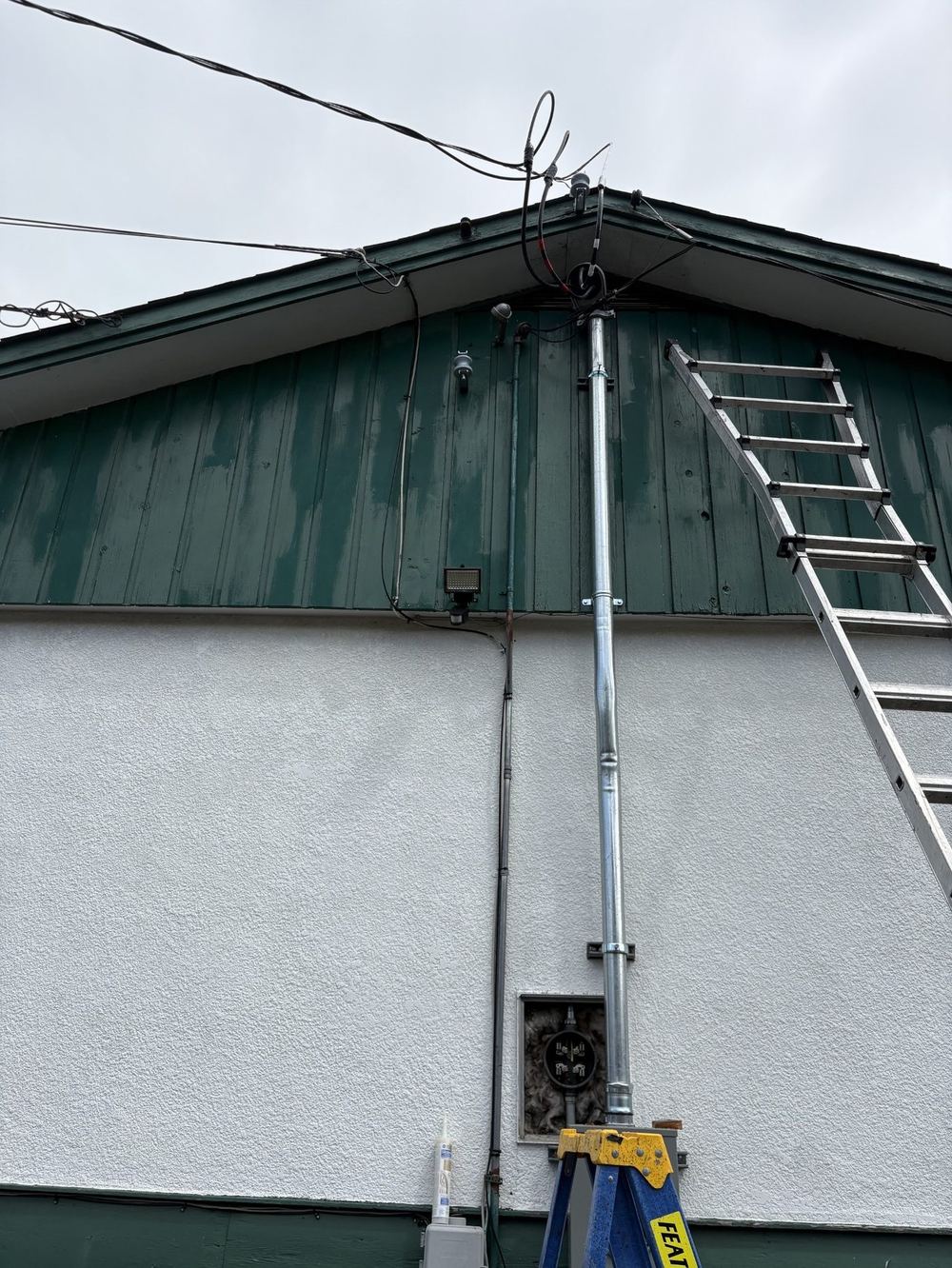
A panel upgrade is one of the more involved jobs I do — it usually means a permit, a brief power shutdown, and coordination with BC Hydro if the service size is changing, not just the panel itself. If you want the specifics for your situation, that's covered under residential wiring and panel upgrades, or you can just tell me what you're seeing and I'll tell you straight whether it's worth a visit.